
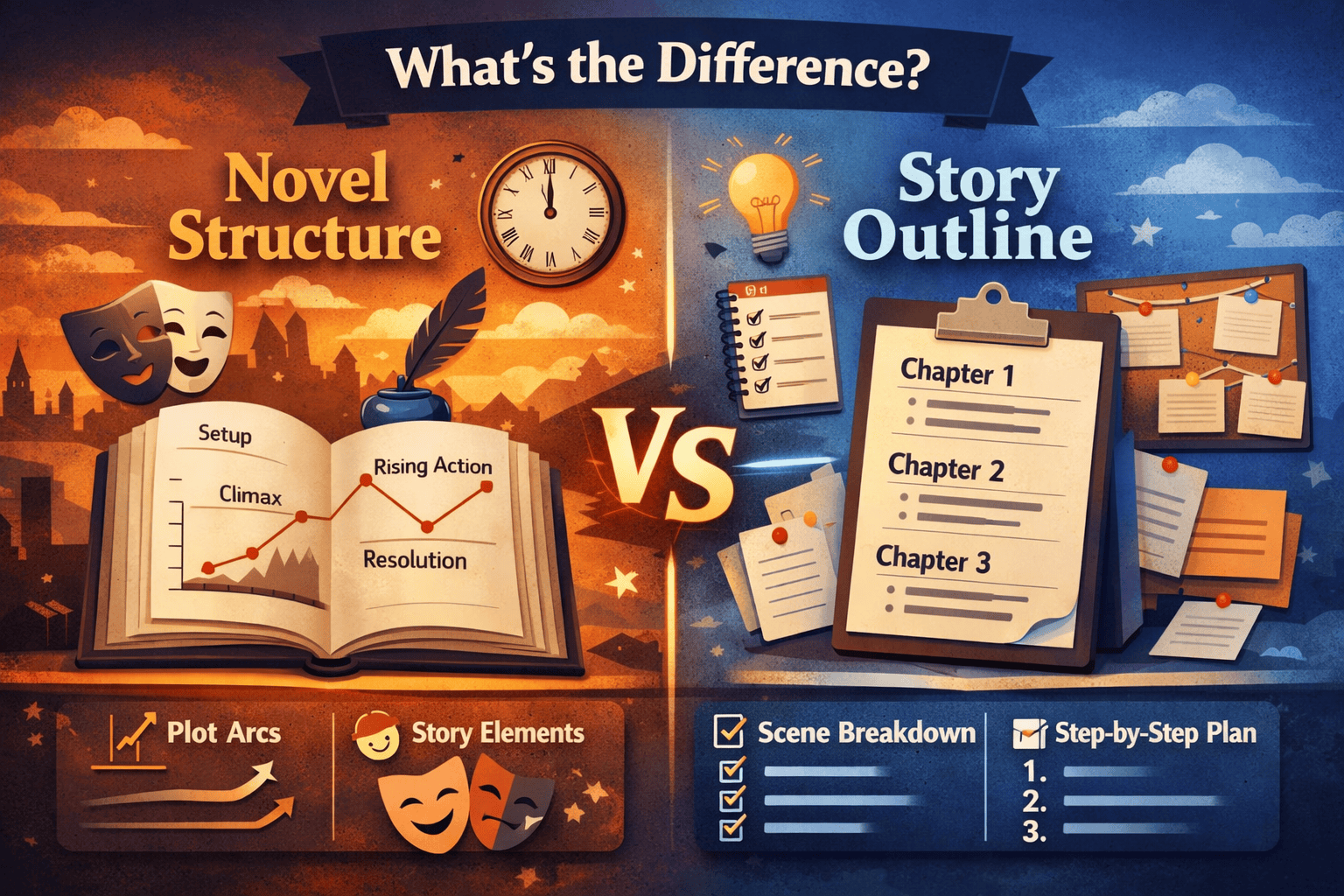
Writers often use the terms novel structure and story outline interchangeably, but they are not the same thing. While both are essential tools in the writing process, they serve different purposes and help authors in different ways.
Understanding the distinction between a novel structure and a story outline can dramatically improve your writing workflow, storytelling clarity, and creative organization. Whether you are writing your first novel or refining your tenth manuscript, knowing how these two concepts work together can make the difference between a chaotic draft and a compelling, well-paced story.
In this article, we will explore what novel structure and story outlines are, how they differ, when to use them, and how successful writers combine both to create engaging fiction.
What Is a Novel Structure?
A novel structure is the overall framework or architecture of a story. It defines how the narrative unfolds from beginning to end. Structure controls pacing, major turning points, character development, tension, and emotional progression. Think of novel structure as the skeleton of your story. It determines:
- Where the story begins
- When major conflicts occur
- How tension rises
- When climaxes happen
- How the resolution is delivered
- The Three-Act Structure: Dividing the story into the Setup, Confrontation, and Resolution.
- The Hero’s Journey: A twelve-stage cycle involving a call to adventure and a final transformation.
- Save the Cat!: A beat sheet that focuses on specific timing for plot points like the "Incitment Incident" and the "All is Lost" moment.
What is a Story Outline?
A story outline is the roadmap. It is a specific, detailed plan that describes what happens in every chapter or scene. While structure is the "shape" of the house, the outline is the "blueprint" showing where every door, window, and piece of furniture goes. An outline typically includes:
- Scene Descriptions: What the characters are doing in a specific location.
- Character Arcs: How a character’s personality or goals change throughout the book.
- Dialogue Notes: Key snippets of conversation that must occur.
Key Differences at a Glance
| Feature | Novel Structure | Story Outline |
|---|---|---|
| Purpose | Ensures pacing and impact | Organizes specific scenes |
| Flexibility | Rigid (follows beats) | Flexible (can be adjusted) |
| Focus | Why and When | How, Where and How | Analogy | The architectural foundation. | The interior design and room layout. |
Why You Need Both?
Relying on an outline without a structure often leads to a "sagging middle"—where things happen, but the reader loses interest because there is no underlying tension. Conversely, following a structure without a detailed outline can lead to "writer’s block," as you know you need a "Climax" but don’t know the specific events leading up to it. Implementation Tip for OutlineGenius Users When using our AI Outline Generator, try to identify which structural beat your generated scenes belong to. For example, if the AI suggests a high-tension scene, check if it fits into your "Act 2 Climax".
Final Thoughts
Novel structure and story outlines are closely connected, but they are not the same thing. Structure provides the narrative framework that shapes pacing and emotional progression, while the outline provides the detailed roadmap of scenes, chapters, and story events. Understanding this distinction can significantly improve your writing process and storytelling quality. A well-structured story keeps readers emotionally engaged. A strong outline keeps the writer organized and productive. Together, they form the foundation of compelling fiction. Whether you prefer careful planning or spontaneous creativity, learning how to balance structure and outlining will help you write stories that are both imaginative and satisfying to read.